Run your whole casting session in one place.
Slayt takes a role from posted to booked. Write the breakdown, collect self-tapes, review hundreds of submissions in an hour, and send your client one link to pick from. No email chains, no Dropbox folders, no spreadsheets. Free for talent and agents, always.
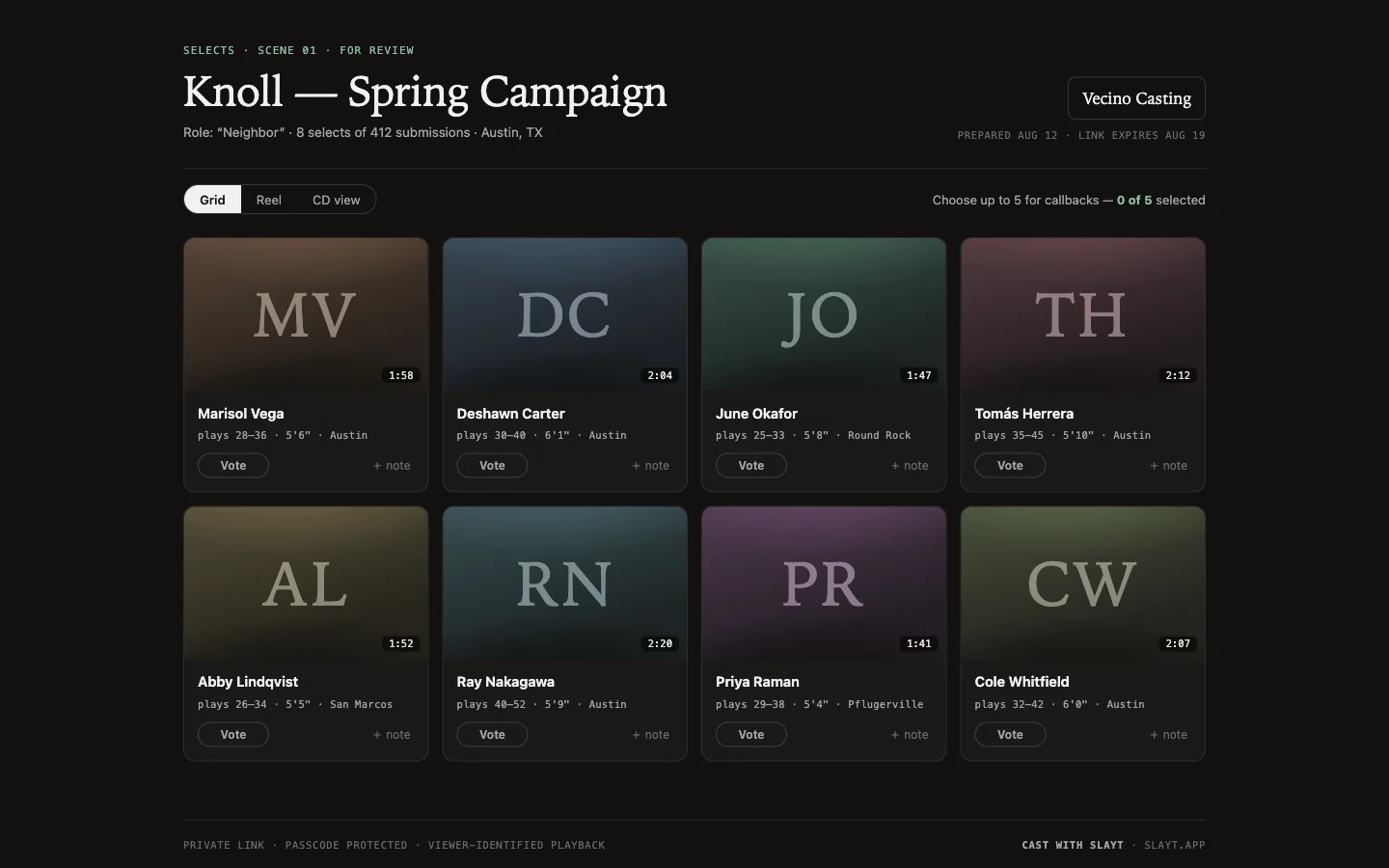
Three portals. One room.
Get your week back.
Only qualified tapes reach you, 400 of them review in about an hour, and your client decides from one link.
Enter the casting side → I'm talentAudition free. Hear back.
No fees, ever. Know the rate before you tape, record in your browser, and always learn how the role ended.
Enter the talent side → I represent talentZero platform fees. Forever.
Submit your roster in minutes, get named access to roles, and never absorb another seat fee.
Enter the agency side →And your clients? They need nothing at all: one link opens the screening room, votes and approvals included. No account, ever.
Casting today is email, Dropbox, and a spreadsheet.
One role gets hundreds of submissions. Tapes arrive as links in six different formats. Scheduling happens over the phone. The client decides in a reply-all thread. And the actors who don't book never hear anything at all. Slayt replaces all of that with one tool built around how a casting office actually works.
Follow one role from posted to booked.
Write your requirements once. Slayt screens every submission.
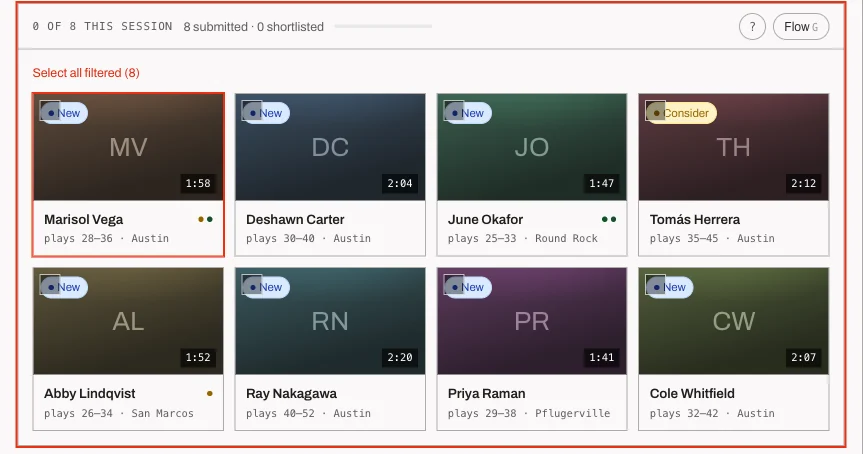
Set the role's requirements: age range, union status, local hire, languages, conflicts. Slayt turns them into simple yes-or-no rules and only lets matching talent submit. If the role needs SAG-eligible and fluent Spanish, everyone in your pile has both. No AI guessing who "feels right."
The rate and usage terms show at the top, so talent knows the deal before spending an hour on a tape.
Actors record their tape right in the browser.
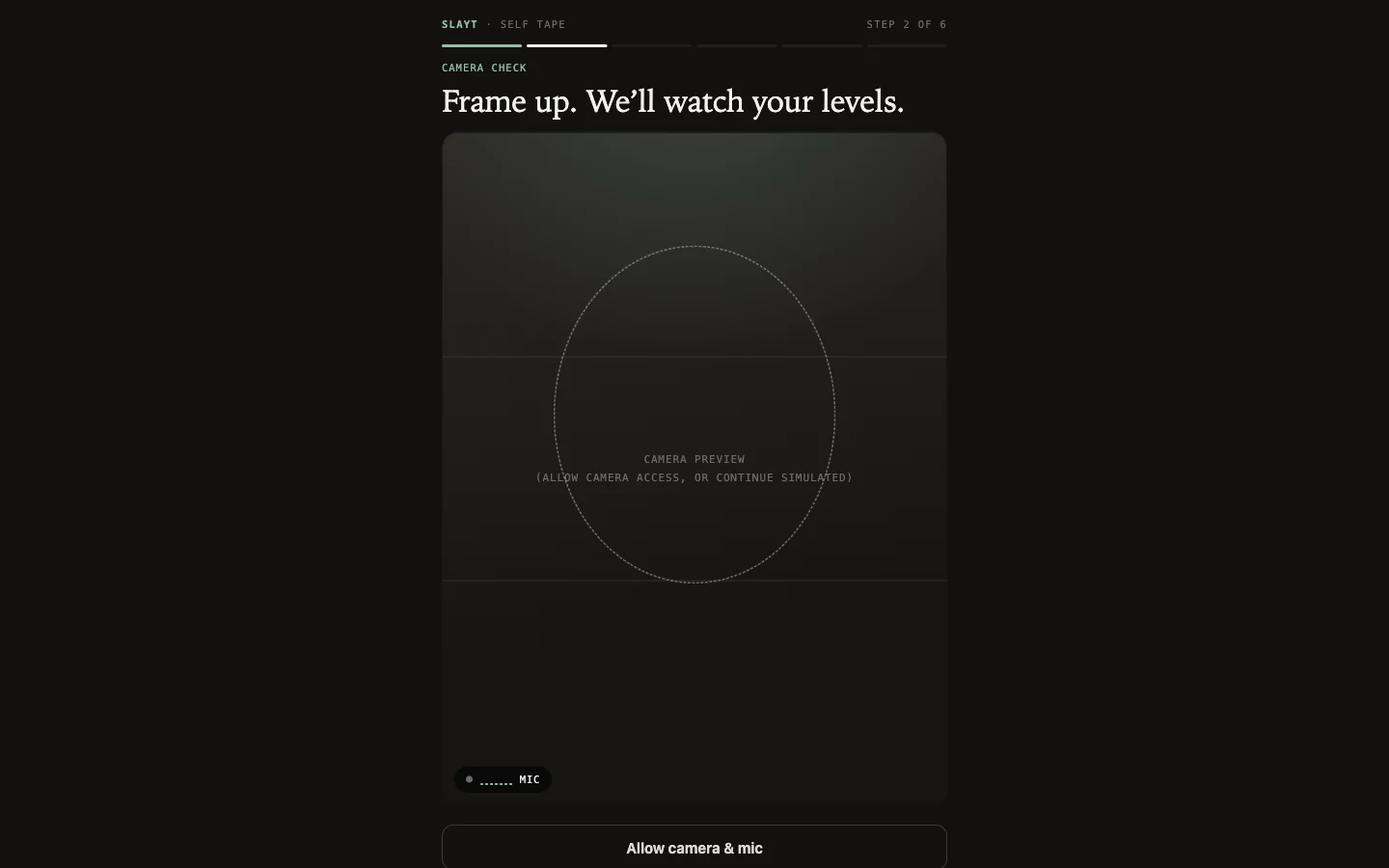
No app to install, no fees, no uploading to a mystery link. A built-in teleprompter shows the actual script, the slate fills in automatically from the actor's profile, and the tape uploads while they record. If the connection drops, the upload resumes on its own. When the screen says "safe to close," the tape is in your hands.
Actors see the requirements before they start, so nobody spends an evening taping for a role they can't book.
Try recording a tape (uses your camera) →Get through 400 tapes in an hour, without touching the mouse.
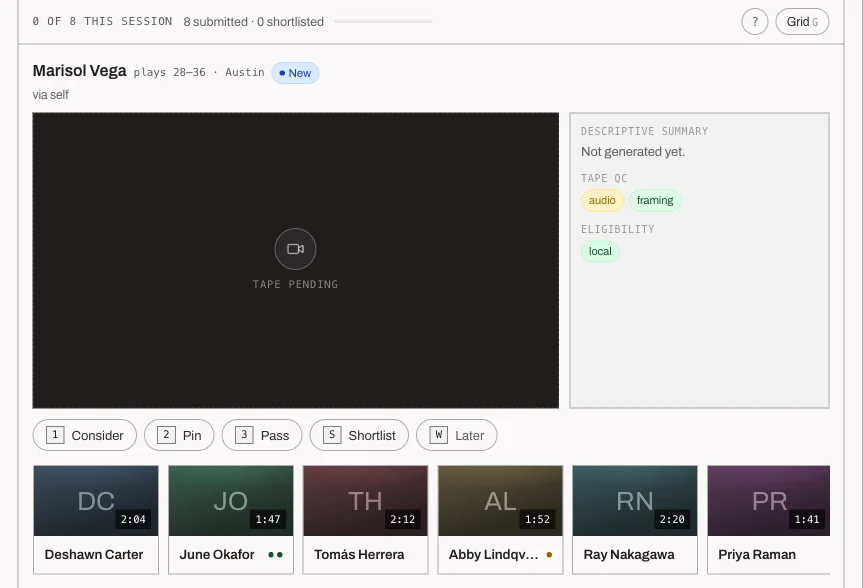
One keypress records your verdict and starts the next tape. The next video is already loaded, slates skip automatically, and Z undoes your last call. Tapes play in random order, so every actor gets the same fair shot at your fresh eyes.
If the same actor comes in through two agents, you see one card and make one decision. Pass on a big batch and Slayt asks for a quick reason, then saves it, so your paper trail writes itself while you work.
Send your client one link. They pick their favorites.
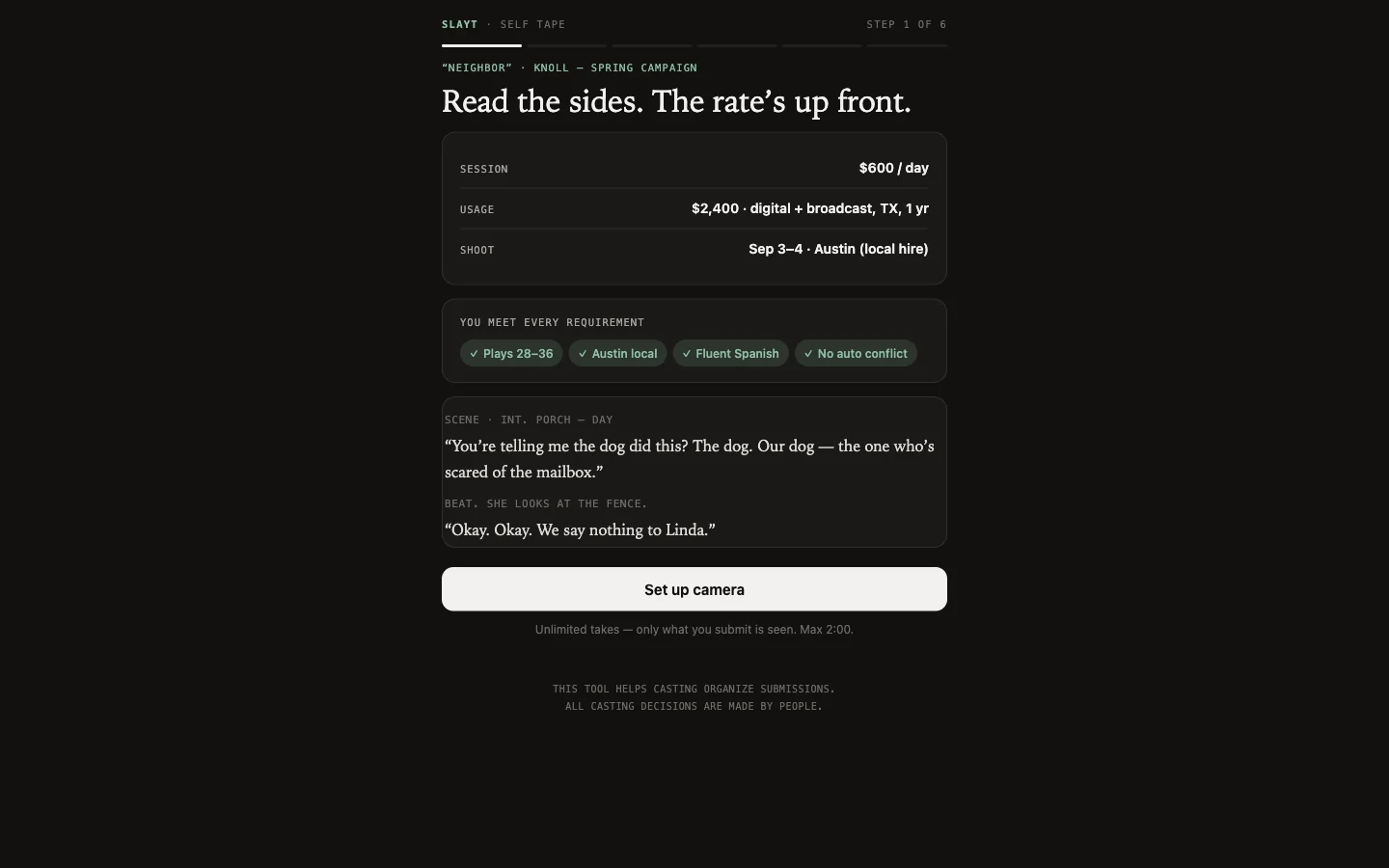
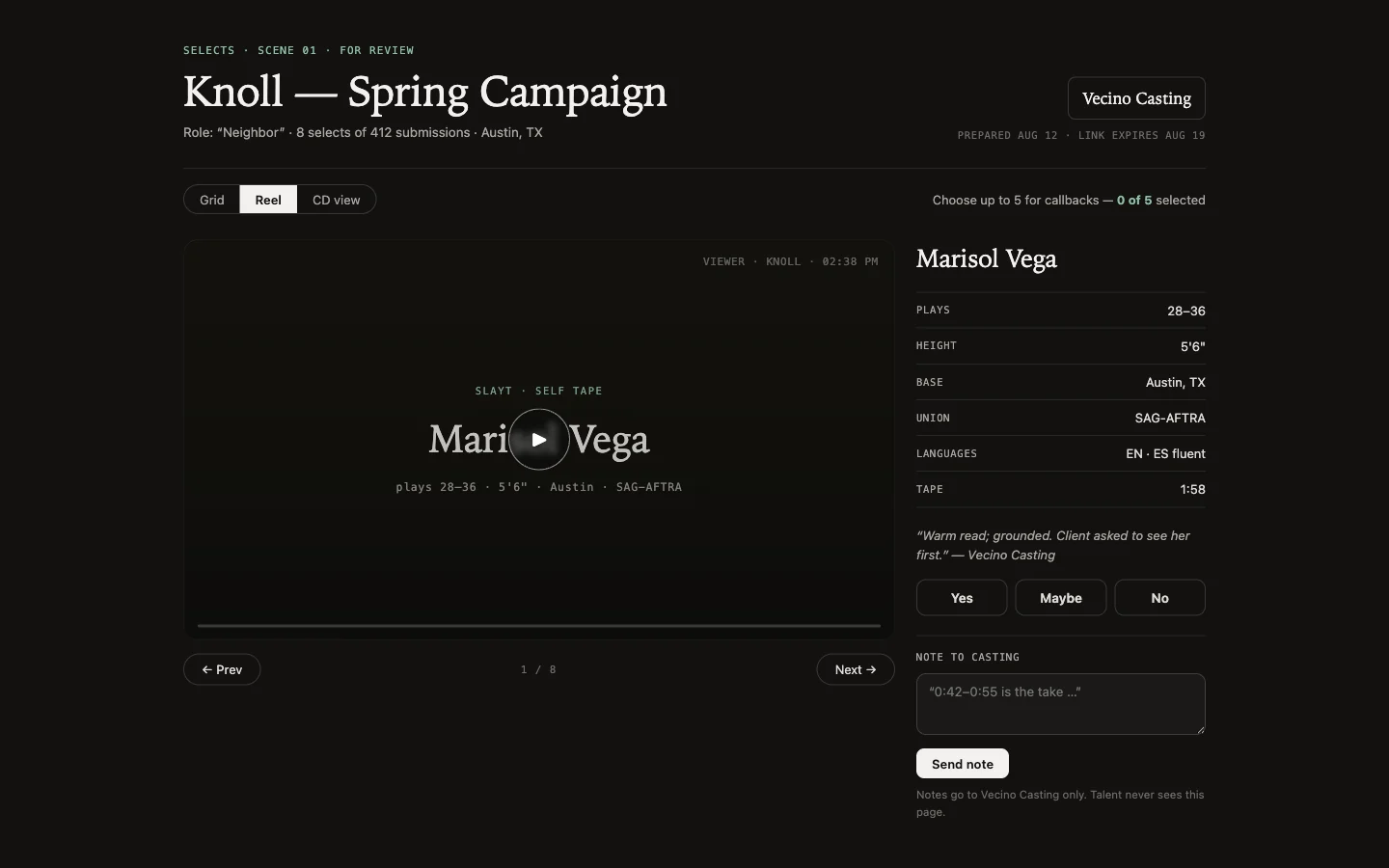
Your client opens a private screening room in their browser. No account, no password, no software to learn. They watch your picks with the specs beside each tape, vote yes, maybe, or no, and choose up to five for callbacks. You watch the votes come in live and always know exactly who approved what.
Every view is watermarked to the viewer. Links expire on a date you set, passcodes are optional, and you can shut a link off with one click.
Open the screening room demo →The whole project on one line, and the one thing that's stuck called out plainly: three sessions unconfirmed, reminder sent.
When the role is cast, every actor finds out.
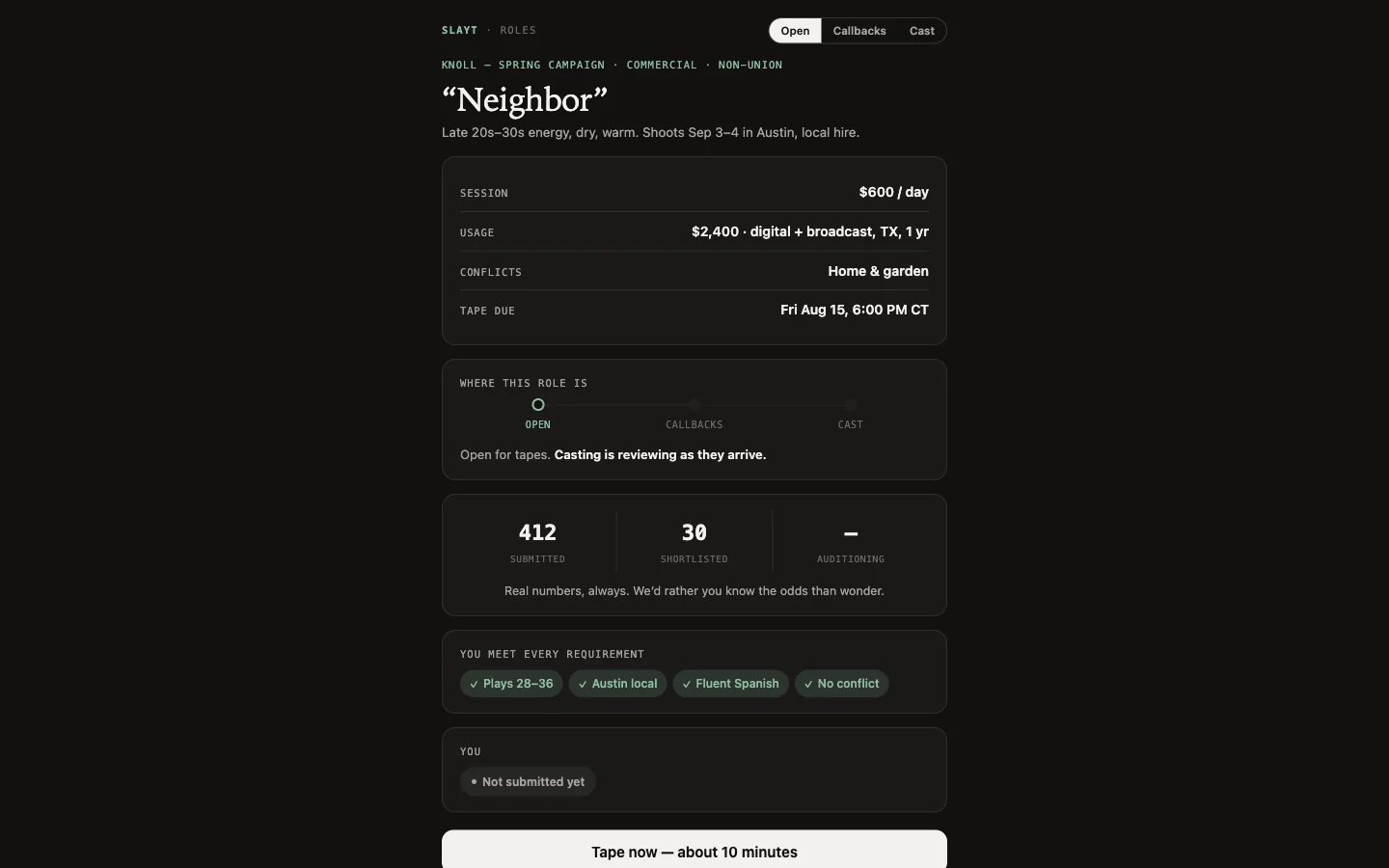
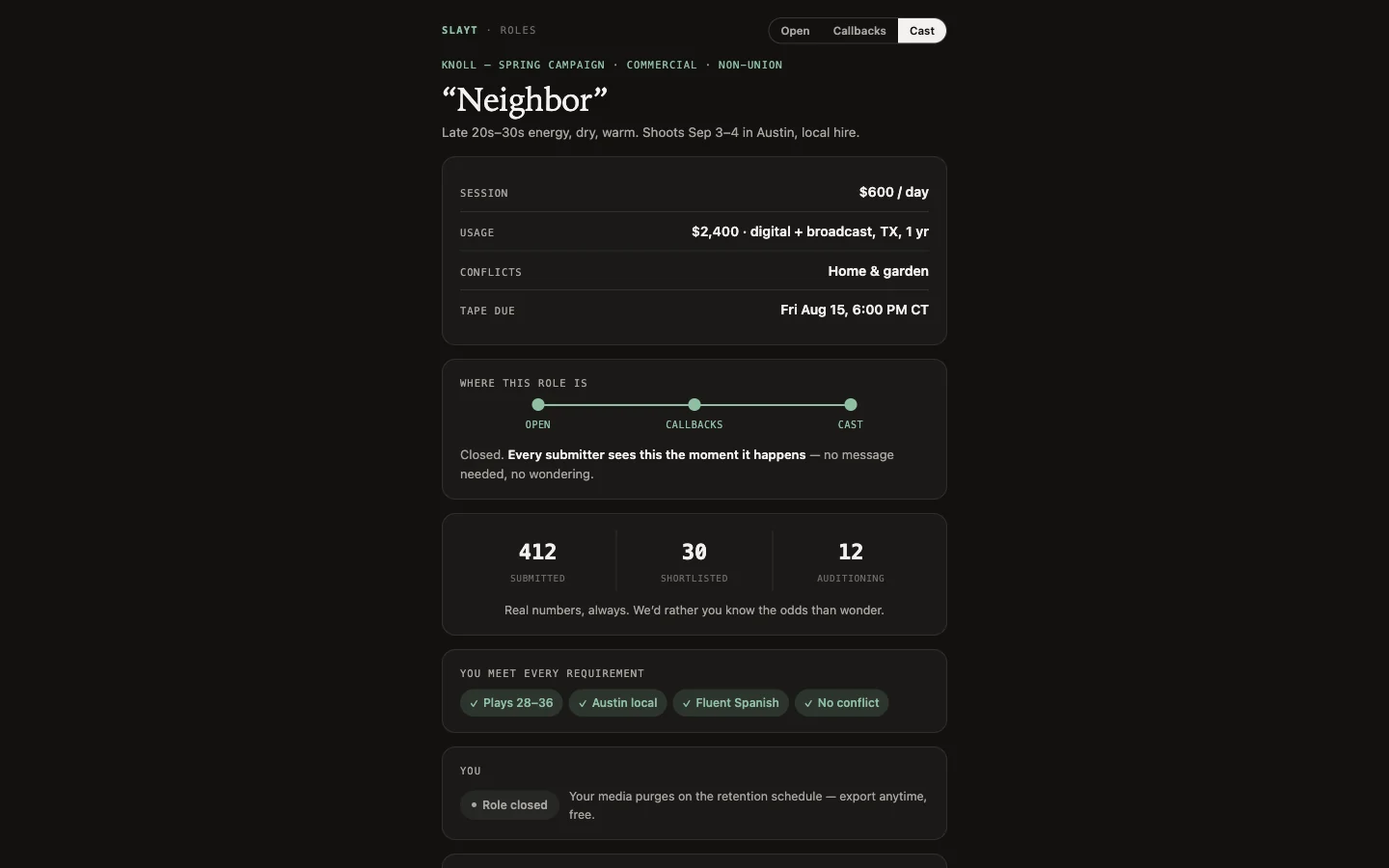
Everyone who submitted can see where the role stands: open, in callbacks, or cast. They see the honest numbers too, like 412 submitted and 30 shortlisted, and nothing personal about anyone else. No read receipts, no streaks, no "submit more" nudges. Just an answer, which is more than this industry has ever offered.
See what talent sees →Who does what, at every stage.
One session, four seats. Each column is a stage; each row is a person. Nobody falls back to email at any point: that's the whole product.
See the whole thing, screen by screen.
Every image below is the real interface, and every one clicks through to a live demo you can try without an account.

Not a marketplace. Not a talent directory. Nobody pays to be seen.
There is no public directory to rank in, no approval queue to wait on, and no fee to get in front of casting. Your profile works the moment you create it, and your tapes stay yours.
Six promises we can't quietly break.
These aren't policies in a handbook. They're built into the software itself, and automated tests block any release that would break one. See how we prove each one →
Texas just committed $1.5 billion to production. Casting tools need to catch up.
Senate Bill 22 puts $300 million every two years into Texas film and commercial production through 2035. To qualify, productions must cast Texas residents: at least 35% today, rising to 50% by 2031. Slayt records residency on every booking automatically, so proving your local cast takes zero extra paperwork.
We're launching with a small group of Austin casting offices and running real projects with them, start to finish. We grow when they vouch for us, not before.